The Road to Damascus
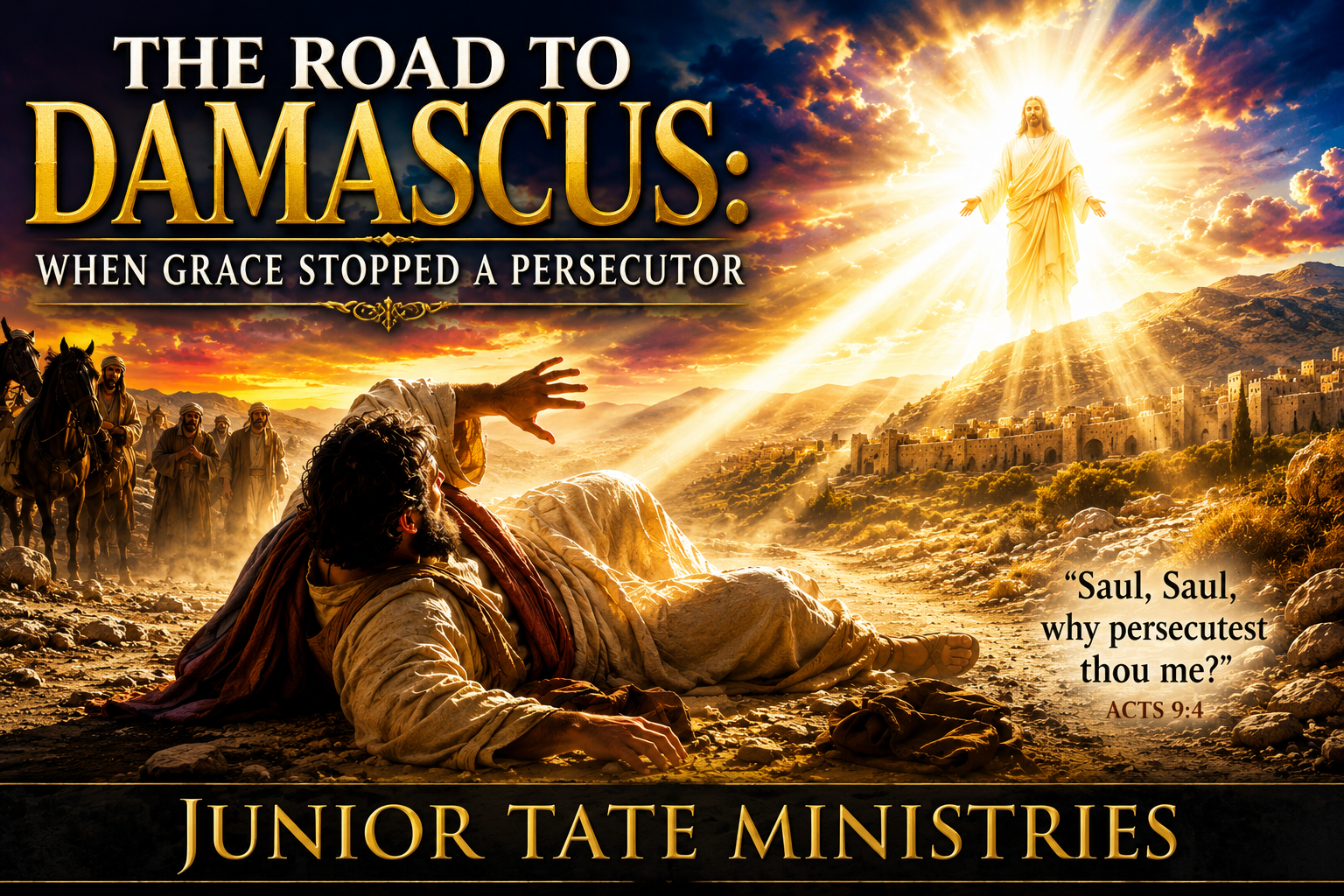
By: Junior Tate When Grace Stopped a Persecutor and Raised Up a Preacher The Road to Damascus is one of the most powerful conversion accounts in all the Word of God. It is not merely the story of a man changing religions. It is the story of the risen Lord Jesus Christ confronting a religious persecutor, breaking his pride, opening his spiritual eyes, and calling him into the ministry of the Gospel. Before Saul became Paul the apostle, he was a fierce enemy of the early Church. He was religious, educated, zealous, and deeply committed to what he believed was right. But sincerity without truth can still be deadly. Saul thought he was serving God, yet he was fighting against the very people who belonged to Christ. The Road to Damascus teaches that salvation is by grace, not by religious achievement. It teaches that Jesus is alive, that He knows His people, that persecution against the Church is persecution against Him, and that no sinner is beyond the reach of God’s mercy. Saul did not find Christ because he was searching for grace. Christ found Saul while Saul was breathing out threats against believers. This moment changed Saul’s life forever. The persecutor became a preacher. The enemy became a servant. The man who once tried to silence the name of Jesus became one of the greatest witnesses of Jesus Christ in biblical history. Saul Before Damascus To understand the power of Saul’s conversion, we must understand who he was before the Lord stopped him on the road. Saul was not an atheist. He was not an idol worshiper. He was a deeply religious Jew, trained in the law, zealous for the traditions of his fathers, and convinced that the followers of Jesus were dangerous. Paul later described his religious background in Philippians. Philippians 3:5-6 (KJV)“Circumcised the eighth day, of the stock of Israel, of the tribe of Benjamin, an Hebrew of the Hebrews; as touching the law, a Pharisee;Concerning zeal, persecuting the church; touching the righteousness which is in the law, blameless.” Saul had heritage, training, zeal, religion, and outward morality. Yet none of those things saved him. This is very important. A person can be religious and still be lost. A person can know Scripture outwardly and still miss Christ inwardly. Saul had knowledge about God, but he did not yet know Jesus Christ as Lord and Saviour. He was a Pharisee, and the Pharisees were strict concerning the law. They cared deeply about religious purity, tradition, and outward obedience. But Saul’s zeal was misdirected. He thought he was defending God’s truth, but he was actually opposing God’s Son. Saul first appears prominently at the death of Stephen, the first Christian martyr recorded in Acts. Acts 7:58 (KJV)“And cast him out of the city, and stoned him: and the witnesses laid down their clothes at a young man’s feet, whose name was Saul.” Stephen had preached Christ boldly to the Jewish leaders. He testified that Israel had resisted the Holy Ghost and rejected the Just One. The people became furious and stoned him. Saul stood there as a young man, watching and consenting to Stephen’s death. Acts 8:1 (KJV)“And Saul was consenting unto his death. And at that time there was a great persecution against the church which was at Jerusalem; and they were all scattered abroad throughout the regions of Judaea and Samaria, except the apostles.” Saul did not merely watch Stephen die. Scripture says he was consenting unto his death. That means he approved of it. He agreed with it. He believed Stephen deserved it. This shows how hardened Saul’s heart was before his conversion. Then Saul went even further. Acts 8:3 (KJV)“As for Saul, he made havock of the church, entering into every house, and haling men and women committed them to prison.” The phrase “made havock” shows violent destruction. Saul was not lightly disagreeing with Christians. He was hunting them. He entered houses. He dragged away men and women. He helped put believers in prison. This was not political disagreement or simple debate. This was persecution against the body of Christ. Yet while Saul was pursuing believers, God was pursuing Saul. Saul’s Mission Against the Church Acts chapter 9 opens with Saul still filled with hatred against the disciples of the Lord. Acts 9:1-2 (KJV)“And Saul, yet breathing out threatenings and slaughter against the disciples of the Lord, went unto the high priest,And desired of him letters to Damascus to the synagogues, that if he found any of this way, whether they were men or women, he might bring them bound unto Jerusalem.” This passage shows the condition of Saul’s heart before grace interrupted him. He was “breathing out threatenings and slaughter.” This was not a passing emotion. This was the very air he breathed. His mind was consumed with destroying the followers of Jesus. He went to the high priest and requested official letters giving him authority to go to Damascus. Damascus was a city outside Jerusalem, showing that Saul’s hatred was spreading. He was not satisfied with persecuting believers nearby. He wanted to travel and bring them back bound to Jerusalem. The believers are called “the way.” Christianity was not first known as a denomination, political movement, or man-made religion. The followers of Jesus were known as those who walked in the way of Christ. Jesus Himself said: John 14:6 (KJV)“Jesus saith unto him, I am the way, the truth, and the life: no man cometh unto the Father, but by me.” The early believers followed the One who is the Way. Saul was trying to destroy “the way,” but on the road to Damascus he would meet the Way Himself. This is one of the great truths of the account. Saul had letters from men, but Christ had authority from Heaven. Saul had permission from the high priest, but Jesus is the great High Priest. Saul thought he was in control of the journey, but the Lord was about to stop … Read more